
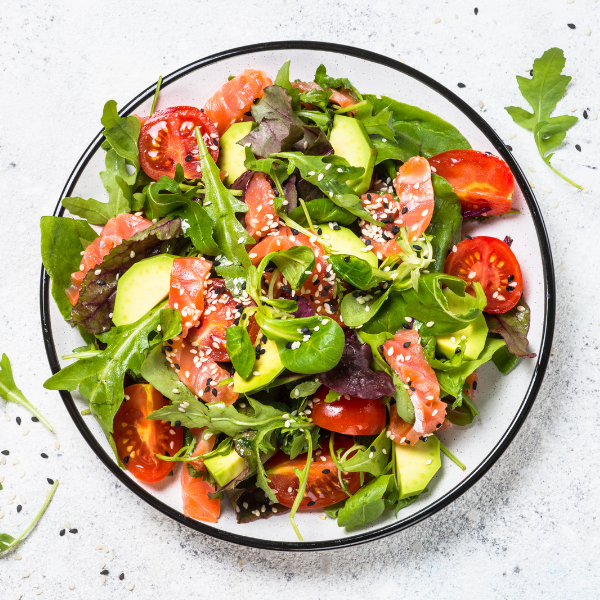
There’s a reason salmon shows up on almost every list of the healthiest foods you can eat. It’s rich, nourishing, and packed with the nutrients your brain and hormones truly need to thrive.
Today I’m sharing a simple salmon salad that comes together in minutes using canned wild salmon. It’s the kind of meal I love to have in my back pocket for busy days when I need something quick, satisfying, and deeply nourishing.
Why Salmon Is One of the Best Foods for Brain Health and Hormone Balance
Salmon is truly a powerhouse food. Here’s why it belongs on your plate when you’re eating for hormone balance:
🐟 It’s one of the richest sources of omega-3 fatty acids — the essential fats your brain and body cannot make on their own. Omega-3s reduce inflammation throughout the body, protect the structure of your brain cells, and have been shown to support memory, mood, and cognitive function. They may even help reduce the risk of cognitive decline as we age.
☀️ It’s an excellent source of vitamin D — a nutrient that most women are low in. Vitamin D is essential for hormone production, bone health, immune function, and mood. Low levels are linked to increased risk of cognitive decline, so getting enough matters more than you might think.
🧠 It’s a complete, high-quality protein — which your body needs to build hormones and produce the neurotransmitters that regulate mood, like dopamine and serotonin. Steady protein at every meal is one of the most important things you can do for your hormones.
💛 It’s rich in B vitamins and selenium — nutrients that support energy, thyroid function, and hormone balance.
The best part? Wild salmon is easy to keep on hand — either fresh, frozen, or canned. This recipe uses canned wild Alaskan salmon, which makes it perfect for busy weeknights or quick lunches.
The Salmon Salad Recipe
Salmon Salad
Serves 1 to 2
Ingredients:
- 1 can wild Alaskan salmon, water-packed, drained
- 1 cup salad greens
- 6 stalks asparagus, trimmed and steamed until tender
- 2 Tbsp fresh parsley, chopped
- 2 Tbsp extra virgin olive oil
- 1 Tbsp fresh lemon juice
- 1 tsp dried thyme
Directions:
- Steam the asparagus for about 10 minutes, until tender. Set aside to cool.
- In a small mixing bowl, whisk together the parsley, olive oil, lemon juice, and thyme.
- Arrange the salad greens on a plate. Add the drained salmon and asparagus on top.
- Drizzle the dressing over everything.
- Serve as a composed salad on a plate, or toss it all together in a bowl for a mixed salad.
Always use organic ingredients whenever possible.
How to Make This a Complete Hormone-Balancing Meal
This salmon salad already brings your healthy protein from the salmon, healthy fats from the salmon and olive oil, and a light dose of carbohydrates from the greens and asparagus.
To make it a truly complete hormonally balanced meal, add a starchy carbohydrate on the side. A few of my favorite pairings:
- A baked or roasted sweet potato
- A small serving of quinoa or wild rice
- Roasted delicata or butternut squash
- Sautéed beets or carrots
Remember, a hormonally balanced meal always includes three things: healthy protein, fats, and carbohydrates. This salad brings the protein and fats, you just need to add a starchy carbohydrate to round it out.
A Few Tips for Making the Best Salmon Salad
Choose wild-caught salmon: Wild-caught Alaskan salmon is higher in omega-3s and lower in contaminants than farm-raised. Look for cans labeled “wild” and ideally BPA-free.
Fresh salmon works too: If you have leftover baked or grilled wild-caught salmon, use about 4 to 6 oz in place of the canned salmon.
Meal prep the asparagus: Steam a big batch of asparagus at the start of the week to make this even faster to throw together.
Play with the herbs: Fresh dill, basil, or chives all work beautifully in place of the parsley. Use whatever you have on hand.
Frequently Asked Questions
Is canned salmon really healthy?
Yes! Canned wild Alaskan salmon is one of the most convenient and affordable ways to get high-quality omega-3s and vitamin D into your day. It’s picked at peak freshness and just as nutritious as fresh — sometimes more so, thanks to the soft edible bones that add calcium.
Can I use pink salmon instead of red?
Absolutely. Both are wild-caught and rich in omega-3s. Red (sockeye) tends to have a stronger flavor and more omega-3s, while pink has a milder taste.
How much salmon should I eat each week?
The American Heart Association recommends at least 2 servings of fatty fish like salmon per week for optimal omega-3 intake. If you’re focused on brain and hormone health, 2 to 3 servings is a beautiful goal.
Is salmon really good for hormones?
Yes. Salmon is rich in omega-3 fatty acids, which reduce inflammation (a major disruptor of hormone balance). It’s also one of the best food sources of vitamin D, which your body needs to produce hormones and it provides complete protein for neurotransmitter production and mood support.

There’s real joy in eating food that both tastes good and supports your body. This salmon salad is exactly that, quick, nourishing and truly good for you.
Simple, beautiful, and truly nourishing. Enjoy every bite. 💛
Love,
Robin xo
Want more simple, hormone-supporting recipes and steady weekly support? Come join us in NHS Circle. It’s where women like you find the rhythm that changes everything. >> Join here.