
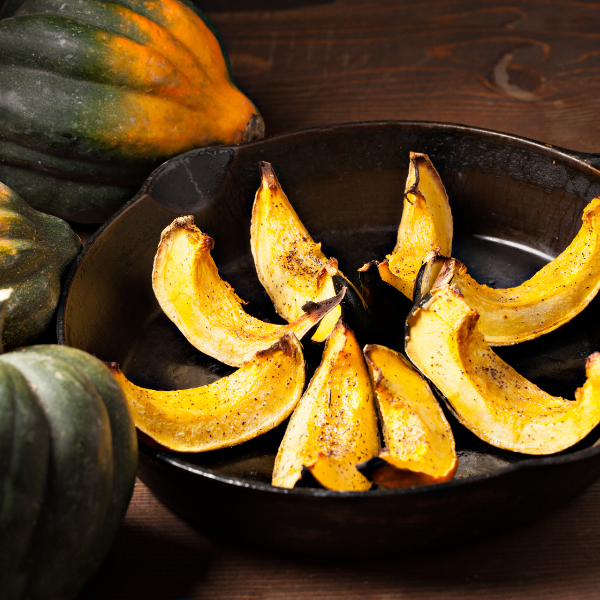
There’s something so comforting about a tray of roasted squash coming out of the oven this time of year. The colors, the warmth, the smell of turmeric and coconut oil, it all just says fall.
Today I’m sharing a turmeric roasted acorn squash that’s simple, satisfying, and deeply anti-inflammatory. It’s the kind of side dish that turns any dinner into something special.
Why Acorn Squash Supports Hormone Balance
Acorn squash is one of the most beautiful fall vegetables you can eat. Here’s why it belongs on your plate when you’re eating for hormone balance:
🍂 It’s rich in vitamin C — one of the most important nutrients for adrenal health. Vitamin C helps your body regulate cortisol, plays a role in progesterone production, and supports collagen for healthy skin.
✨ It’s high in fiber — a single cup offers 9 grams of both soluble and insoluble fiber, which supports gut health and helps your body gently eliminate excess estrogen.
🌿 It’s a beautiful source of potassium — which helps maintain healthy blood pressure and supports steady hydration.
💛 It’s rich in magnesium, manganese, and thiamine — nutrients that support calm moods, restful sleep, and steady energy.
🥕 In its raw form, it contains three powerful antioxidants — beta-carotene, lutein, and zeaxanthin — that support eye health and reduce oxidative stress. When cooked, most of its other vitamins and minerals actually increase, so acorn squash is beautiful enjoyed either way.
When paired with turmeric, acorn squash becomes an even more powerful hormone ally. Turmeric contains curcumin, one of the most researched anti-inflammatory compounds in nature. And since chronic inflammation is one of the biggest disruptors of hormone balance, this pairing is truly special.
The Turmeric Roasted Acorn Squash Recipe
Turmeric Roasted Acorn Squash
Serves 4
Ingredients:
- 1 acorn squash, halved, seeded, and cut into 1-inch thick wedges
- 1 Tbsp ground turmeric
- 2 Tbsp coconut oil, melted
- Sea salt and black pepper, to taste
Directions:
- Preheat the oven to 425°F and line a baking sheet with parchment paper.
- In a large bowl, toss the acorn squash wedges with the melted coconut oil and ground turmeric until evenly coated.
- Lay the wedges in a single layer on the prepared baking sheet. Sprinkle with sea salt and black pepper.
- Roast for 45 minutes, flipping halfway through, until tender and golden at the edges.
Always use organic ingredients whenever possible.
How to Make This a Complete Hormone-Balancing Meal
This turmeric roasted acorn squash is a beautiful side dish on its own, full of healthy fats from the coconut oil and gentle carbohydrates from the squash.
To make it a complete hormonally balanced meal, pair it with a healthy animal protein. A few of my favorites:
- Grilled chicken
- Wild-caught salmon
- Grass-fed steak
- Grass-fed ground beef
- Roasted turkey
Remember, a hormonally balanced meal always includes three things: healthy protein, fats and carbohydrates. This squash brings the fats and carbs, you just need to add a palm-sized portion of protein.
Feel free to add a big green salad or some sautéed greens on the side to round out the plate with even more color and nutrients.
A Few Tips for Shopping and Storing Acorn Squash
Shopping for acorn squash: Look for squash that feels firm and heavy for its size, with dull (not shiny) skin. A patch of orange on the skin is a good sign of ripeness. Avoid any with soft spots, cracks, or extremely shiny skin.
Storing acorn squash: Whole acorn squash keeps beautifully in a cool, dry place for up to 3 months. That makes it perfect to buy in bulk during fall and enjoy through the holidays.
Cutting acorn squash safely: The skin is tough, so use a sharp, sturdy knife. Cut a small slice off the bottom first so it sits flat, then slice in half from top to bottom. Scoop out the seeds with a spoon before slicing into wedges.
Save the seeds: Acorn squash seeds can be rinsed, tossed with olive oil and sea salt, and roasted at 350°F for 15 to 20 minutes for a beautiful hormone-supporting snack.
Meal prep friendly: Roast a big tray at the start of the week and add to salads, grain bowls, or serve alongside your favorite protein.
Frequently Asked Questions
Do I need to peel acorn squash?
Nope! The skin is edible and softens beautifully when roasted. It also holds the wedge shape together, so leave it on for easier eating.
Can I use another squash instead of acorn?
Yes. Butternut, kabocha, or delicata all work well, just adjust the roasting time depending on how thick you slice them.
Why coconut oil and turmeric?
Turmeric is fat-soluble, meaning your body absorbs its anti-inflammatory compounds (curcumin) much better when it’s paired with a healthy fat like coconut oil. This combination is intentional and beautiful for your hormones.
Is acorn squash really good for hormones?
Yes. Acorn squash is rich in vitamin C (which supports your adrenals and progesterone production), fiber (which supports gut health and estrogen elimination), and magnesium (which supports calm moods and restful sleep). Paired with turmeric, it’s also deeply anti-inflammatory, an important piece of hormone balance.

There’s real joy in eating food that both tastes good and supports your body. This turmeric roasted acorn squash is exactly that warm, colorful, and truly nourishing.
Simple, beautiful, and truly nourishing. Enjoy every bite. 💛
Love,
Robin xo
Want more simple, hormone-supporting recipes and steady weekly support? Come join us in NHS Circle. It’s where women like you find the rhythm that changes everything. Join here!